
Another one bites the dust!

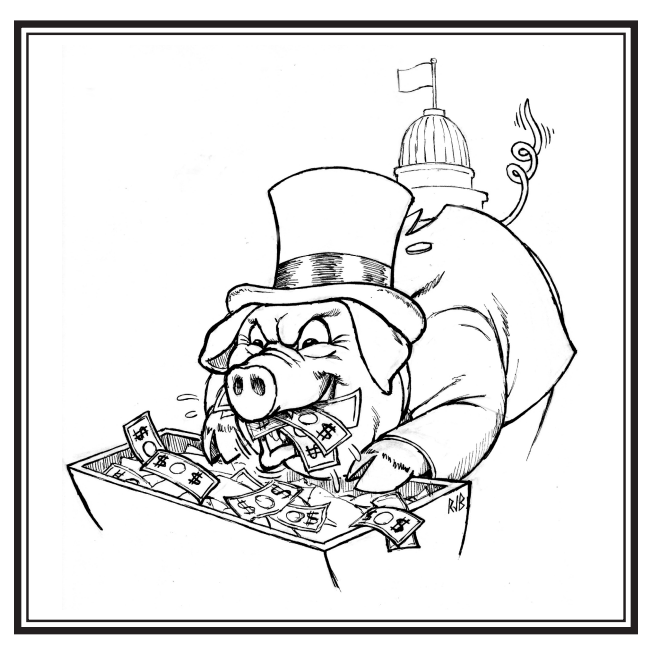
Despite all the tax hikes during the last legislative session, we at the Rio Grande Foundation got some sense of vindication today when yet another pork project that we had outlined in our 2008 Piglet Book (page 13) was abandoned. The latest is the $13 million that the Legislature had set aside for a $23 million equestrian center from which money will be diverted to other, more pressing capital projects.

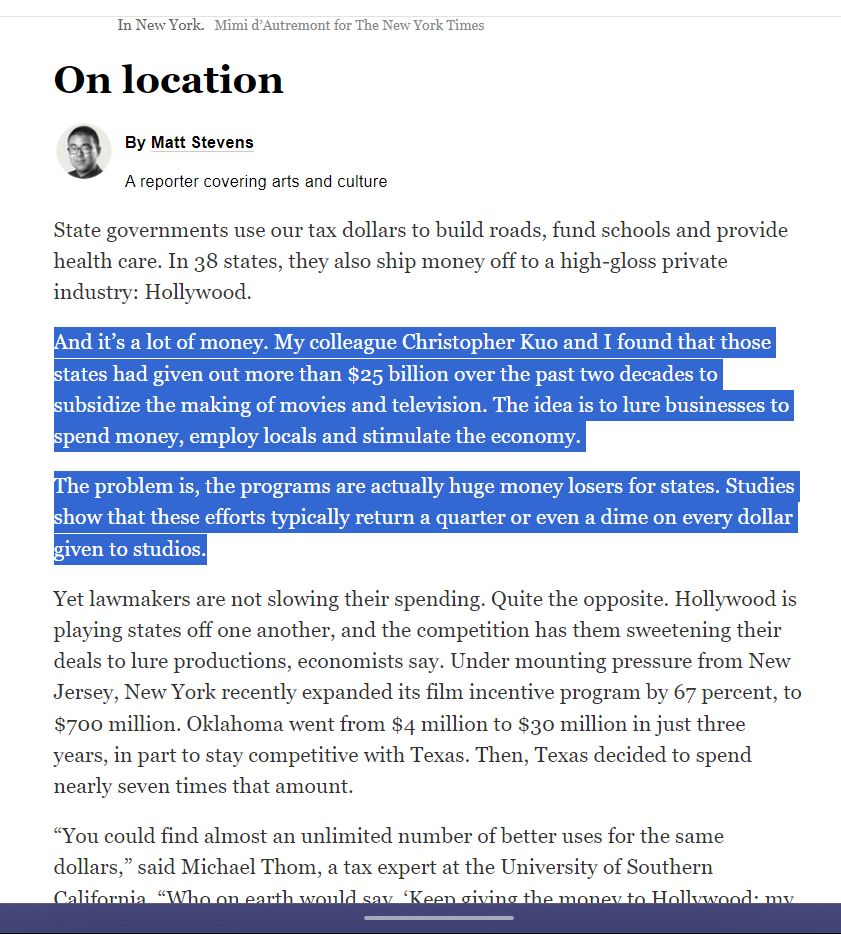
While this hardly represents a “victory” for taxpayers in light of all of the spending and the general lack of fiscal responsibility among those in the Executive and Legislative Branches who control the process, it is a start. Now, if we’d only abandon (or at least constrain the growth of) programs like the $80 million film subsidies, never have built the RailRunner or Spaceport, and gotten serious about reducing government employment, we’d be dealing with surpluses rather than tax hikes.

Posted on March 13, 2010 at 9:58 am by Paul Gessing · Permalink · Leave a comment
In: Uncategorized

Disagreeing with the Experts

Nothing gets the blood flowing like internecine warfare. It is very easy to lob bombs at the left and others who want to “socialize” medicine, but it is quite another thing — a much more difficult one — to disagree with a nationally-recognized advocate for free market health care.

John Goodman of the National Center for Policy Analysis, a health care expert with far more years in the field than I, recently blogged about some of the ideas put forth by Republicans in their health care meeting with President Obama. The idea that Goodman disagrees so vehemently with is to allow all out-of-pocket spending on health care to be deductible. This, proponents (like me) argue, would ultimately undermine the third-party-payer system of health care in this country because employees would no longer have the incentive to rely on their employers for health care and would instead take the additional pay and enter the individual market, more than likely adapting health savings accounts and other consumer-driven health care products in large numbers.

Goodman argues that eliminating taxes health care expenses would create a situation in which “government would be paying almost half the cost…” With this subsidy, health care spending would rise dramatically. He instead argues for equalizing the tax treatment of health care with other goods — an ideal solution that I agree with — but I doubt that Congress or the American people would go along with such a massive tax hike unless tax rates were lowered…and you get the picture. Very complex and not likely to happen.

So, I remain supportive of eliminating taxes on health care. Why? Well, first and foremost, even if you are being subsidized to the tune of 50% for health care, you still control the money and will work to keep costs down. Pricing will become a part of the health care industry in a way that it is not today because of the third-party system. Also, the individual market will grow, thus making that a more viable proposition and keeping costs down and giving millions of Americans greater control of their health care (no more remaining stuck in a job just because of health care). Lastly, consumer-driven health care like HSA’s will take off and flourish. These all seem like good things to me. Besides, do you really trust politicians to not cave into special interests by exempting health insurance from taxation as we did in New Mexico (NM’s gross receipts tax still hits certain health care costs like deductibles and co-pays).

Ending taxation of health care costs seems to have more benefits than drawbacks. Maybe I’m wrong. What do you think?

Posted on March 12, 2010 at 5:33 pm by Paul Gessing · Permalink · One Comment
In: Uncategorized

Is Toyota’s Failure a Market Failure?

The problems associated with Toyota’s faulty brakes are by now widely known. Many on the left and in government will use this as an opportunity to expand government power while blaming the free market for yet another failure.

But, as this column from the free market think tank, The Independent Institute points out, people (and businesses) are not perfect. Toyota clearly screwed up here and the market (average customers reacting to information) is punishing them. The loss of millions of dollars in sales, not to mention the harm this issue has done to the company’s public image, will serve as an incentive to Toyota not to cut corners next time and a reminder to other businesses — automotive and otherwise — to make sure that their products are ready for “prime time” before they are sold to the public.

In other words, the market is responding quickly to make sure this doesn’t happen again or happens less often in the future. As we see in the field of education, the same cannot be said for government.

Posted on at 12:44 pm by Paul Gessing · Permalink · Leave a comment
In: Uncategorized

Paul Gessing’s EIB Conflict of Interest Statement Footage (and commentary from American Spectator)

Footage of my appearance before the Environmental Improvement Board on March 1, 2010 is now available (below). Also, Paul Chesser over at the American Spectator blog picked up the story and added his own thoughts.

Posted on March 11, 2010 at 4:40 pm by Paul Gessing · Permalink · Leave a comment
In: Uncategorized

Malpractice Costly, but not a Silver Bullet in Health Care

Dr. John Vigil was one of two doctors that appeared on a panel with me at Rep. Martin Heinrich’s town hall meeting last summer (video available here). (Remember the good old days when Obama and Congressional Democrats actually cared what form health care reform took rather than just attempting to pass any health care reform they could muster up the votes for?)

Anyway, I was pleasantly surprised when I sat on that panel to learn that Rep. Heinrich had not stacked the panel with pro-government reform proponents. Dr. Vigil in particular impressed me. Well, in today’s Albuquerque Journal, Dr. Vigil explains that medical malpractice, while not solving all of America’s health care problems, could have a significant, positive impact in terms of cost savings of $20-$30 billion annually or more.

Tort reform, as one component of other market-based reforms, could have a significant, positive impact on costs and quality, but as we have seen since Scott Brown’s election in Massachusetts, Obama is pushing harder than ever, regardless of what that “reform” ultimately looks like.

Posted on at 11:04 am by Paul Gessing · Permalink · Leave a comment
In: Uncategorized

Big Bill “Hates” the Food Tax (but not that much)

On this week’s Forum over at the New Mexico Independent, the question was whether or not Gov. Richardson should or should not sign the tax hike on groceries which he claims to “hate.” View my response (and those of other panelists here). As I point out, the decision at this point is a difficult one. No one hates taxes more than I do, but as Terri Cole points out in support of re-instating the tax, this is a broad-based tax.

If Richardson really “hated” the food tax, he might have wanted to consider that before he pushed so hard for/refused to reconsider costly projects like the RailRunner, the Spaceport, and $80 million annually in film subsidies. Even during this legislative session, Richardson refused to get serious about cutting government spending and our bloated state government (including merging agencies as was recommended by his own government efficiency task force).

So, should Richardson sign the food tax hike? Well, since he seems hell-bent on raising taxes, I’d rather have that tax raised than hikes to income taxes or further hikes to the economically-devastating gross receipts tax even further. No matter what happens, it is clear that Richardson doesn’t “hate” the food tax hike enough to actually do something about it.

Posted on March 10, 2010 at 10:47 am by Paul Gessing · Permalink · Leave a comment
In: Uncategorized

Congressional District 3 Candidate Forum Video Posted

Last week, the Rio Grande Foundation hosted a candidate forum between District 3 (the norther district) Congressional candidates Tom Mullins and Adam Kokesh. Incumbent Ben Ray Lujan was invited, but did not attend.

The video is split into two parts. Part one can be found here:

Part two can be found here:

Posted on March 9, 2010 at 4:22 pm by Paul Gessing · Permalink · One Comment
In: Uncategorized

Sign Petition to Support Albuquerque Businesses!

The Rio Grande Foundation, in response to the unfair attacks upon them by the Los Angeles-based Southwest Regional Council of Carpenters, is urging supporters to actively visit businesses that have been targeted by the Union, to report which businesses are being targeted (for posting at ErrorsofEnchantment.com) and to sign this petition which will be released to the local media in early April and mailed to the union in Los Angeles (all contact information will be stripped from the petition before it is sent).

So, sign the petition and send the names of locations of businesses that have been targeted and thus deserve support. An initial list can be found here:

La-Z-Boy on San Mateo & McLeod
Healthsouth hospital on Jefferson and Ellison
Lovelace Women’s Hospital on Montgomery
Il Vicino at Alameda and Corrales
Hotel Andaluz (downtown)
Hotel Albuquerque on Rio Grande
The New Mexico Educators Federal Credit Union
on Americas Parkway NE

Posted on at 12:25 pm by Paul Gessing · Permalink · 3 Comments
In: Uncategorized

Support Unfairly Targeted Businesses!

I’m calling for a “buycott.” Not a “boycott,” but a “buycott.” If you read the Business section of today’s Albuquerque Journal, you may have an idea what I’m talking about. You have probably seen the “shame on” banners around town in front of certain businesses. It turns out that an out-of-town union, the Los Angeles-based Southwest Regional Council of Carpenters is behind the “shame on” banners, but they wouldn’t even tell the Journal’s Rivkela Brodsky why exactly they are attempting to give these businesses a black eye.

So, I hope you’ll join me in this “buycott” by actively helping these businesses whenever possible. Patronize them and when you do, tell their employees or a manger if you can find them that you are actively counteracting the union thuggery. An active “buycott” will show these union thugs that they are not welcome in Albuquerque, but we need your help. The unions are not picketing 24/7 and they only picket once in a while — after all, they are hiring minimum wage, non-union workers to do their dirty work.

So, I hope you’ll help me compile a list of businesses that have been targeted by this out-of-state carpenter’s union. If you see these “shame on” banners around town, send us an email at: info@riograndefoundation.org and we’ll post a list of targeted businesses on our websites errorsofenchantment.com and newmexicoliberty.com. Thanks for your help!

Posted on March 8, 2010 at 5:03 pm by Paul Gessing · Permalink · Leave a comment
In: Uncategorized

Self-Serving Special Interests

I just loved Rusty Schmit’s article on the Environmental Improvement Board’s supposed “need” to cap carbon emissions. According to Schmitt, who happens to run a solar company based in Albuquerque, reducing carbon emissions to 25% before 1990 levels would have an undeniably positive impact on New Mexico’s economy. He cites a study from the liberal “Center for American Progress” to back up his claims.

I read through the CAP study and found nothing convincing to back up Schmit’s claim. Basically, it was a rehashing of optimistic national job growth estimates, most of which have been put together by supporters of wind and solar. What I’d like to know is this: “If the EIB cap of 25% below 1990 levels will be so good for the economy, then why the heck are we stopping at 25% below 1990 levels?” Why not really boost job growth by eliminating carbon usage entirely?

The fact is that carbon-based energy sources, coal, oil, and natural gas, to name just a few, are far more cost-efficient and, because they are cheaper and more reliable, they will raise our living standards far more effectively than a radical shift to “renewables.” There is simply no way for the special interests to refute the fact that doing something for 50% of the cost — and that is being generous to the renewable folks who will have to reach into far less optimal solar and wind sources to build necessary capacity — is worse for the economy than doubling costs.

Of course, when your business depends on government subsidies and intervention in the economy, you can do amazing tricks of logic.

Posted on at 11:04 am by Paul Gessing · Permalink · Leave a comment
In: Uncategorized