But what about the children?

Ellen Bernstein of the Albuquerque Teachers Federation was in the Albuquerque Journal today railing on against balancing the budget by cutting education.

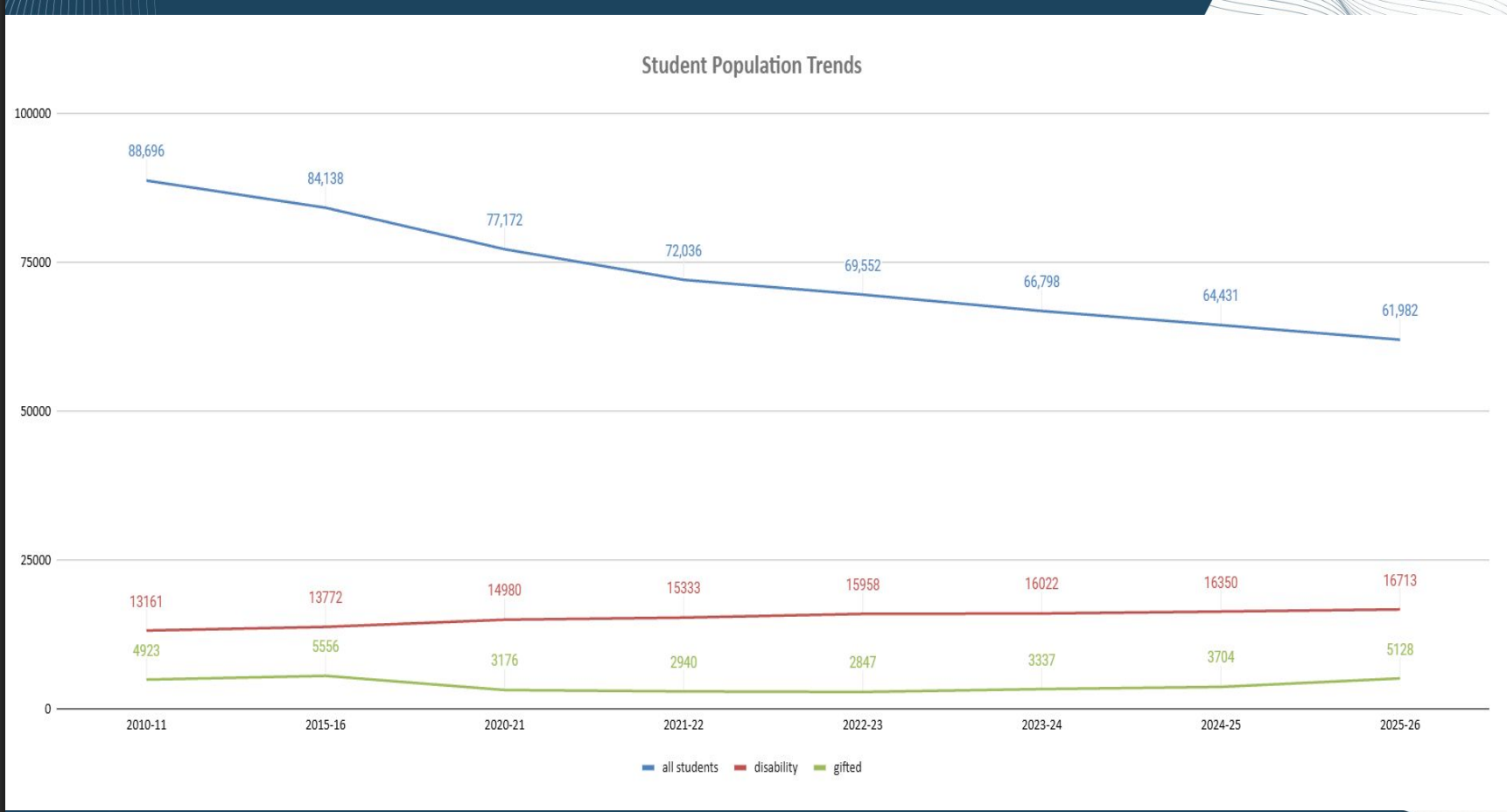
The funny thing about the article is that she really doesn’t offer any specifics as to how cutting education spending will actually affect student performance and harm New Mexico’s education outcomes? Of course, I’d hate to have to argue her point because up until the current financial crisis, real per-pupil education spending has doubled with little in the way of results to show for the increased spending.

Instead, Bernstein focuses on the economic harm that cuts in teacher salaries will have on teachers. She fails to mention that the rest of us are facing cutbacks and poor economic growth.

Of course, as Dr. Ladner pointed out last week, there is a path forward to real education reform and improved results, without increasing overall spending. Among Ladner’s more salient points is that increased class sizes are not really harmful. In fact, if we are able to weed out the least effective teachers and put those kids in the classrooms of the most effective teachers — even if we double their class sizes — education results and overall learning will improve. Unfortunately, as liberal columnist Leonard Pitts points out, the unions have been fighting against such accountability for years and show few signs of relenting, even with Barack Obama in the White House.

Posted on August 4, 2010 at 5:17 pm by Paul Gessing · Permalink · 2 Comments
In: Uncategorized

What is a public record?

The Rio Grande Foundation has put together, but not formally launched yet, a new website containing large amounts of data on public school employee payroll and vendor payments in the state of New Mexico. This project involved large numbers of data requests of supposedly public information from school districts and governments statewide.

Unfortunately, just because information is “public,” doesn’t mean it is easy (or cheap) to access. Read articles on the topic from the Santa Fe New Mexican and the Reporter. One school district that was less-than cooperative was the Santa Fe school district which wanted to charge more than $1,200 for electronic documents. Now, I’m not claiming that there is no expense in putting payroll information together, but $1,200? Shouldn’t this data all be in electronic form to begin with? Paper copies can certainly be expensive — and New Mexico law is written with that in mind — but electronic copies should be a fraction of the cost of paper copies.

The fact is that New Mexico’s new “Sunshine Portal,” set to get up and running within the next year, needs to include school districts. While the current version of does not, hopefully legislators will demand transparency from the schools which spend nearly half of the state’s budget.

Posted on at 9:08 am by Paul Gessing · Permalink · Leave a comment
In: Uncategorized

Research & Commentary: Film Tax Credits: Do They Work? (A Heartland Institute Update)

I received the following information from the Heartland Institute, a Chicago-based free market think tank that works nationally. The data are coming in on film incentives in the various states and, not surprisingly, it is negative in terms of economic activity generated by states giving taxpayer dollars and interest-free loans to film production companies.

Despite massive budget deficits and threats to cut essential programs, states across the nation are continuing to extend subsidies to the film industry through refundable tax credits and sales tax exemptions. At least 44 states currently offer some form of film subsidy, some subsidizing upwards of 30 to 40 percent of a movie’s production costs.

These flashy attempts to bring Hollywood to legislators’ home states have consistently failed to create long-term economic growth and bring in permanent jobs.

According to Greg Albrecht, chief economist for Louisiana’s Legislative Fiscal Office, even the most “successful” film subsidy programs bring little value. In Louisiana, he found, “Even if 100 percent of the reported production budget amounts were being spent purchasing goods and services from Louisiana suppliers, the economic benefits would not be sufficient to provide tax receipts approaching a level necessary to offset the costs of the tax credits.”

Doling out taxpayer dollars to filmmakers is no substitute for sound fiscal policy. States should avoid manipulating the tax code to favor the movie industry, or any other industry, over existing businesses. Such “economic development” schemes–film tax credits, state-owned golf courses, publicly financed stadiums, and the like–are nothing more than pork projects.

Instead of pushing an increasingly inefficient film subsidy “arms race,” state governments should look to boost their economies the old-fashioned way: by reining in government spending and creating a tax code that is low, non-distorting, and broad-based.

The documents cited below provide further information on the economic impact of film subsidy programs.

States’ Film Production Incentives Cause Jitters

http://www.nytimes.com/2008/10/12/us/12incentives.html

The New York Times reports on the expansion of film tax subsidies and how much they are costing taxpayers. Among other examples, the article notes Louisiana taxpayers were put on the hook for $27 million for the Brad Pitt film, The Curious Case of Benjamin Button.

Movie Production Incentives: Blockbuster Support for Lackluster Policy

http://www.taxfoundation.org/publications/show/25706.html

Will Luther of the Tax Foundation says film tax incentives are corporate welfare that creates a subsidy bidding war among states.

Tax Credits for the Motion Picture Industry

http://www.budgetandtax-news.org/article/24182

The Massachusetts Budget and Policy Center outlines how film tax credits work, to whom they are given, how effective they are, and how many jobs they actually bring to Massachusetts.

Roll the Credits … and the Tax Incentives

http://www.minneapolisfed.org/publications_papers/pub_display.cfm?id=1309

Writing for FedGazette, a regional business and economics newspaper published by the Federal Reserve Bank of Minneapolis, Kathy Cobb analyzes the history of film tax credits and considers their effectiveness in producing real economic growth.

Hollywood East? Film Tax Credits in New England

http://www.budgetandtax-news.org/article/24181

Darcy Rollins Saas, a policy analyst for the New England Public Policy Center at the Federal Reserve Bank of Boston, examines the effect film tax credits have had in the Northeast. She finds, “revenue losses are exacerbated by the tendency of these tax credits, like almost all tax credits, to subsidize activity not originally targeted and to provide more incentive than needed to induce the desired response.”

Special Effects: Flawed Report on Film Incentive Provides Distorted Lens

http://www.budgetandtax-news.org/article/28093

Michael D. LaFaive, director of the Mackinac Center’s Morey Fiscal Policy Initiative, analyzes the state’s film incentives program and finds it has failed to produce the lofty economic results some have claimed for it.

Reviews for State’s Film Tax Credit Aren’t Good

http://www.projo.com/news/content/FILM_TAX_CREDIT_08-12-08_ALB5IV1_v12.412297f.html

The Providence Journal finds Hollywood is the real winner when states implement film tax credits. The story cites a report by the Rhode Island Department of Revenue which found, “The state gets back 28 cents for every dollar it gives up to the production companies.”

Indiana Film Incentives Fail to Attract Filmmakers So Far

http://www.indy.com/posts/10770

Indiana, where the legislature approved less-extravagant film subsidies compared with those in other states, has not seen an influx of movie production.

Posted on August 3, 2010 at 1:44 pm by Paul Gessing · Permalink · Leave a comment
In: Uncategorized

Ladner, Florida K-12 Reforms Garner Widespread Coverage

In case you missed it, the Rio Grande Foundation made quite a splash with our recent events on K-12 education reform with Dr. Matthew Ladner. This resulted in an editorial and a front-page story indicating that gubernatorial Susana Martinez had adapted much of the Florida model as her platform.

Ladner’s presentation is available here:

His powerpoint presentation can be found here. Ladner also sat down with the folks at KUNM for an interview which can be found here.

Posted on August 2, 2010 at 4:59 pm by Paul Gessing · Permalink · 4 Comments
In: Uncategorized

Mayor Berry’s Recycling Plan: A Win-Win for Albuquerque

I like the way Mayor Berry is thinking about recycling. The mayor recently outlined a plan to work with private investors to construct a new $5 to $10 million recycling plant. This would hopefully boost the paltry 6% of the city’s “waste stream” that is now recycled.

While I am skeptical about the net positive impact of recycling, I am indeed a regular recycler as I take my cans, bottles, and papers to the local drop off centers around town. Given the conditions of these bins and the fact that they are regularly full, not to mention the issues the city has with recycling glass, I’m convinced the City could do better. That is where Mayor Berry comes in.

A new recycling facility would help the City expand its recycling efforts, and, by relying on the private sector, this could be done without additional expense to taxpayers. A win-win, right? Well, not if you are in organized labor.

The local AFSCME rep has concerns. He claims “We can run a facility like this inhouse that will be the most cost effective.” Really? Where were the proposals from organized labor before? Sure, the City should be open to serious proposals from organized labor as to how we can dramatically upgrade our recycling program at no cost to taxpayers. The thing is, it sounds like a new processing center is necessary and unless private funds are brought to bear, this center won’t happen.

AFSCME is the single largest contributor to political campaigns in the US, having donated more than US$38 million since 1990. Thus, they are sitting on a lot of money that they typically use to support their preferred big-government candidates. Perhaps $10 million of that could be invested in this center? I don’t know, but I think the answer here is to leverage private investment for public (taxpayer) benefit.

Posted on at 12:40 pm by Paul Gessing · Permalink · Leave a comment
In: Uncategorized

Why Would Santa Fe Voters Approve Bond for Santa Fe Community College?

On Tuesday, voters in Santa Fe will be asked to take on $35 million in new debt — paid by property tax revenues — to fund a variety of projects at the Community College. We at the Rio Grande Foundation typically have our concerns about government debt issuance and bonds and this one is no different.

The biggest issue is that New Mexico is already dramatically over-served in terms of higher education institutions. This is true both in terms of government employment and the sheer number of institutions relative to a state like Arizona.

Lastly, what services does Santa Fe Community College provide that the College of Santa Fe does not? Would it make sense to combine the schools or at least share some resources before going to the taxpayers for more money? Of course, if voters simply vote “yes,” none of these issues will be addressed.

Posted on August 1, 2010 at 4:20 pm by Paul Gessing · Permalink · 2 Comments
In: Uncategorized

Of Building Codes and Sprinklers

So, it turns out that New Mexico’s Construction Industries Division (CID) is going to scale back its proposed building codes due to industry concerns. No more mandatory sprinklers; no more demanding that if 50 percent of an existing building is remodeled, the entire structure must be upgraded to the new codes.

That’s great, but the CID wants to move forward with a policy that the new state regulations must be 10 percent stricter than new national model codes (whatever that means). Of course, folks from the CID claim that this increased efficiency is all for free because customers will benefit from less energy usage, but I remain unconvinced.

Regardless, it seems to me that the CID has overstepped its bounds by dealing with energy usage and sprinklers in the first place. Building codes should be there to protect the public’s safety from buildings that are dangerous or will fall down, not to mandate the latest environmental regulations or sprinklers.

After all, shouldn’t you be able to build your building and experience savings without some bureaucrat — waiting in the wings with the force of law — telling you how to build? Clearly, a horribly inefficient building will be an energy sink and would not be a popular choice in the market, but shouldn’t building buyers and tenants have that choice? The same applies to sprinklers. If sprinklers are a major benefit, the insurance companies will price policies in such a way as to make it worth our while — much like those anti-theft devices on cars — why do we need the state looking over our shoulders?

I say, get the CID back to making sure basic safety measures are in place. Leave energy efficiency and the deluxe sprinkler systems up to the free market lest they completely kill New Mexico’s building industry.

Posted on July 31, 2010 at 9:11 am by Paul Gessing · Permalink · 2 Comments
In: Uncategorized

Is California’s Film Loss Our Gain?

Governor Richardson and advocates of massive taxpayer subsidies to the film industry just don’t understand basic economics. According to the New Mexico Independent, Richardson is touting a new study on the decline of the film industry in California and its move to other states.

In a press release, Richardson stated “This study illustrates the value of our film initiatives from the point of view of a state that has lost significant numbers of jobs and revenue because of intense competition from places like New Mexico.” This is supposed to be taken as a justification for New Mexico taxpayers picking up the tab for 25% of film production costs and interest-free loans. The problem is that ANY industry would move to New Mexico given such largess. That doesn’t mean that it is a net economic benefit for the state (or taxpayers).

Let me explain it this way. If we give enough money to a particular industry, we will see increased activity in that sector. Where Richardson and his cronies fall down in their analysis is in assuming that the $60+ million for the fiscal year that just ended would not have resulted in even more jobs and wealth creation than the film subsidies. Richardson naturally assumes that he knows best, but as Nobel Prize-winning economist FA Hayek pointed out, central planners always face the problem of inadequate information relative to their counterparts acting in a free market.

Whatever the studies show, it takes a great deal of faith in the forecasting abilities of Bill Richardson to believe that central planning on behalf of the film industry makes economic sense.

Posted on July 27, 2010 at 12:13 pm by Paul Gessing · Permalink · 2 Comments
In: Uncategorized

Mayor Berry’s Efforts to Trim Private Sector are Spot-on

Tom Molitor ran for the Legislature in the Republican Primary. He tells me he is done with politics (forever) and is now doing some writing for the Rio Grande Foundation. He is quite articulate and I am pleased to have him out there putting forth the ideas of individual liberty and limited government. In today’s Albuquerque Journal, Tom explains why Mayor Berry is on the side of the angels in his ongoing battle with the public-sector unions.

Read more of Tom’s recent writings and blogs over at Tom’s page at NewMexicoLiberty.com.

Posted on July 26, 2010 at 9:11 am by Paul Gessing · Permalink · Leave a comment
In: Uncategorized

Albuquerque’s Arena Envy

With Mayor Berry spending political capitol in order to spend no more money than the City of Albuquerque can actually afford to pay its employees (an effort we at RGF strongly support), one might think that the City is in for a few years of necessary fiscal restraint. Well, you might be right, but you might be wrong too.

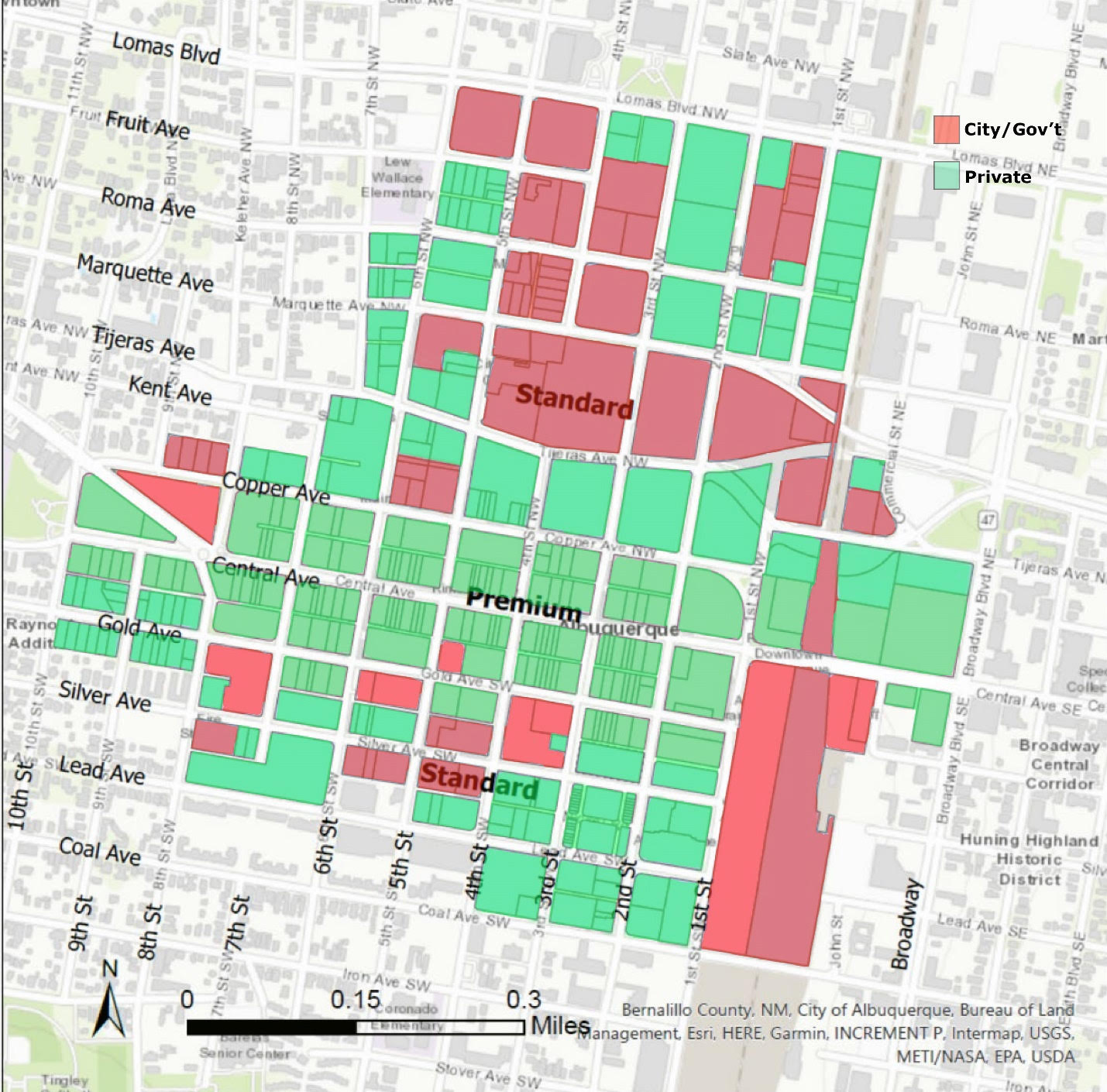
The question of fiscal restraint in the Berry Administration likely hinges on the issue of the downtown events center. As I write in this week’s Alibi, Mayor Berry should abandon the events center/arena project based on the simple fact that it represents an expensive entry into a declining convention center marketplace that a businessman like Berry would never invest his own money in. If you are as concerned as I am, drop the Mayor a line.

Posted on July 22, 2010 at 9:44 am by Paul Gessing · Permalink · One Comment
In: Uncategorized