Another film subsidy corruption story

Last legislative session, Gov. Martinez led the charge (along with Rep. Dennis Kintigh) to restrain and reform New Mexico’s film subsidy program. The cause was helped by the myriad scandals (and here) and shady bookkeeping around the nation.

Well, film subsidies, though reduced, haven’t gone away. And that means that scandals are still happening as well. Here is a story about a filmmaker in Massachusetts that was indicted on 10 counts of making false claims and larceny after receiving $4.7 million in tax credits from the state, according to the attorney general’s office.

Interestingly-enough, the program in Massachusetts appears to be quite similar to that offered here in New Mexico with filmmakers receiving a 25% rebate on all “eligible” expenses.

While eliminating the program in its entirety is probably not realistic, I’d like to see efforts to gradually wean the filmmakers off of the taxpayers’ teat over time.

Posted on December 22, 2011 at 11:11 am by Paul Gessing · Permalink · Leave a comment
In: Uncategorized

Reduce income inequality: get married!

We at the Rio Grande Foundation don’t believe in telling people how to live their lives. To this end, we tend to stay out of most social policy issues. But, sometimes statistics just scream for attention.

Take this recent story. According to the story:

“What’s the best way to improve your chances of finding someone to put a ring on it? Stay in school and get rich:

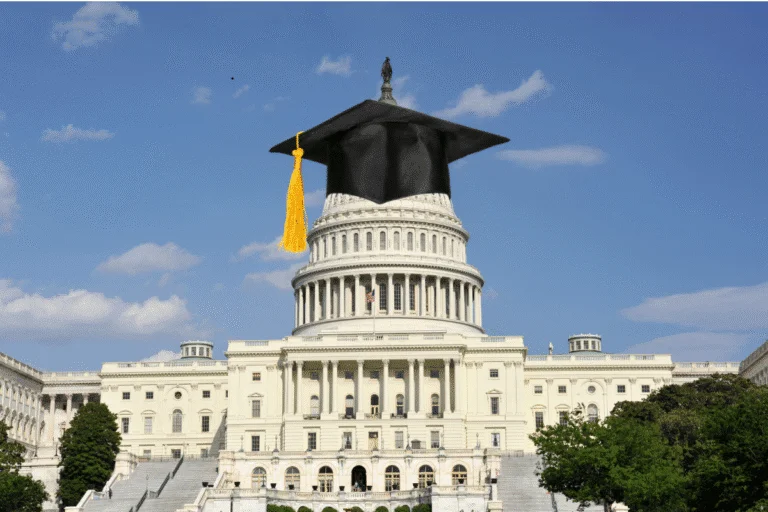
Fifty years ago, 72 percent of those who never went to college got married, which was just 4 percent less than rate for those who did. Today only 48 percent of those with a high school diploma or less get married, but for college graduates the rate is 64 percent.

Furthermore:

According to the Bureau of Labor Statistics, the median weekly earning of someone with a college degree is $1,140 — nearly double that of someone who only graduated from high school. (Also, 24.8 percent of Americans have college degrees today, that’s more than twice the number 50 years ago.) Not only does income increase the amount of marriage, marriage also increases the amount of income. Married people tend to earn more and also benefit from economies of scale — sharing the costs of housing and utilities for example.

So, what’s the takeaway? First and foremost, when those dreaded 99%ers start talking about inequality, they might want to look in the mirror first to better understand why income inequality may be growing. Also, perhaps if the poor and low income folks took the institution of marriage more seriously and stuck with it, they’d be better off economically. Lastly, marriage (like getting an education) requires commitment. It only makes sense that people who are more successful at one are also more successful at the other.

What can government do? A good start would be to reduce dependency on government programs that give people the incentive to rely on government rather than friends, family, and their spouses.

Posted on December 21, 2011 at 1:02 pm by Paul Gessing · Permalink · One Comment
In: Uncategorized

Comment on the sand dune lizard

The federal Fish and Wildlife Service is collecting comments on the Sand Dune Lizard in southwestern New Mexico. The listing information can be found here and you can click here to submit your comments (I have done so).

Rep. Steve Pearce has been a leader on this issue on behalf of New Mexicans concerned about the economy and their way of life. Plenty of information on the lizard is available, but Pearce has an excellent synopsis here.

Posted on December 20, 2011 at 5:27 pm by Paul Gessing · Permalink · Leave a comment
In: Uncategorized

Radio interview: year in review, upcoming legislative session

Sat down with Mike Jaxson of KSVP Radio for an episode of “This week in Chaves County” to discuss 2011 and look forward to what we should expect in 2012. Check out the 10 minute interview here.

Posted on at 12:31 pm by Paul Gessing · Permalink · One Comment
In: Uncategorized

Spurring dialogue on health care

Recently, a series of letters to the editor responded (mostly in a hostile fashion) to an op-ed published by Dr. Deane Waldman. Read the letters in their entirety (and a response by Dr. Waldman) below:

LETTERS TO THE EDITOR
Faith in Regulation
RE: DR. J. Deane Waldman’s op-ed (“Government Drives Up Health Care Cost”): … First of all, Dr. Waldman should leave his politics out of the discussion regarding health care costs. He quotes a Heritage Foundation spokesman, and he is an adjunct scholar with the Rio Grande Foundation, both very conservative think tanks. When he quotes that 40 percent or $1 trillion in 2010 just disappears in money spent for health care, there’s no reference to where that number comes from.
I would like to quote some numbers that do have a credible source. The Centers for Disease Control and the Institute of Medicine have reported between 100,000 and 135,000 deaths annually due to hospital and doctor error. Based on those numbers, it’s hard to argue for less regulation. The free-market approach to health care hasn’t worked, so to blame government for all its cost problems is factually not true. I would recommend that Dr. Waldman read T.R. Reid’s recent book,”The Healing of America.”
On a personal note, I have over 45 years of experience as a heath care advocate and also lost two sons due to the lack of health care regulations being enforced. We don’t need less regulation.
RICHARD J. VALDEZ Albuquerque

Don’t Believe the Hype
A RECENT LETTER by Dr. J. Deane Waldman, “Government Drives Up Health Care Cost,” perpetuates many of the myths and scare tactics that have long been advanced by those against health reform and consumer protections.
The U.S. Department of Health and Human Services (recently) released its long-awaited rules that will require insurance companies to spend at least 80 percent to 85 percent of their revenue on actual patient care, a big win for consumers and patients alike, many of whom are now covered by plans that Dr. Waldman correctly notes spent as much as 40 percent of revenue on nonpatient expenses, without any accountability to their patients or the public.
Earlier this year, the Centers for Medicare & Medicaid Services noted that more than 100,000 New Mexico Medicaid recipients had received free preventive care services thanks to the Patient Protection and Affordable Care Act, and increases in health care costs were held to new 10-year lows. Up-front preventive care keeps thousands of New Mexicans out of hospital emergency rooms every year, and that saves taxpayers big money.
In the same edition of the Journal , the Career Section ran a piece highlighting the need for more health care providers to tend to the greater number of people already receiving health care. The Dec. 6 Journal ran stories highlighting the benefit to more than 18,000 students who received primary and behavioral health care from schoolbased health centers funded in part by the ACA and new provisions of the act that will help to integrate and modernize patient medical records to prevent records mix-ups and malpractice claims.
As the nation and state move forward in implementing provisions of the act, we have a responsibility to set aside divisive political rhetoric and focus on the progress New Mexico is making in creating healthy families thanks to greater access and transparency in our health care system.
RAYMOND SCHALL Bernalillo

The Dangers of Dogma
RE: OP-ED by Dr. J. Deane Waldman, adjunct scholar, Rio Grande Foundation:
The public policy “contributions” in the Journal from the Rio Grande Foundation are so consistently flawed and so predictably fatuous that they are cold comfort to those of us interested in civilized and informed debate.
The trouble this time, argues a Rio Grande acolyte, is that the government — always bad — has a unseemly hand on the cost of health care in this country. The villain of course is the country’s new Patient Protection and Affordable Care Act —“Obamacare” — and the crime is the desultory effect of policy intervention on the free-market cost of health care services. The real problem I would argue is that the “free-market” libertarian apologists of the Rio Grande variety are simply unwilling or unable to think about “us” in the plural in any constructive way. Any common and legitimate goals we might have as a society must pass their inane free market test. If the country were being ravished by a plague killing everything it its path, should we, the people, the government, mount a coordinated and concerted intervention? No, they would have to argue — to be consistent — let the free market figure it out. Is there any point in having any constructive ideas about the direction of the country and the health and welfare and future of its citizens? Not really; the free market will figure it all out!
Our common purse — government resources — fields a military, explores space, helps build highways and, yes, invented the Internet. In the same way, our government is in a unique and powerful position to establish rules for the private sector that bend the cost curve on health care and provide a level of coverage available to almost all citizens of the developed world except those in the United States. A stopped clock is right twice a day, but cross Rio Grande off your mustread list: The free market tooth fairy clouds their thinking about even the most basic human needs.
DOUG BYERS Albuquerque

Here is Dr. Waldman’s response:

Healthcare Dialogue, At Last! Thank You.

Deane Waldman MD-MBA is the author of “Uproot U.S. Healthcare.”

Thank you, Albuquerque Journal. Thank you, people. We have taken a first, admittedly tiny, step toward actually fixing healthcare in this country. That first step is discussion, dialogue, discourse, debate, and certainly difference.

In the Journal of 12/4/11, I wrote about how the costs of healthcare were in, not “out of,” control. I wrote that the government was the controller as well as biggest consumer of our healthcare dollars rather than We The Patients and the people who provide health care.

Obviously, people responded to that article. I write obviously because the Journal printed three responses on 12/17/11 probably out of a much larger number. Though the comments are opposed to what I wrote, I deeply appreciate them. As I have written repeatedly in books, articles, and online, the necessary first step to fixing healthcare is people talking with other people.

In keeping with the concept of dialogue, let me respond to the responders.

The Centers for Disease Control and the Institute of Medicine (IOM) are credible sources of data. But so are the Cato Institute as well as the Heritage and Rio Grande Foundations. Just because one may tend toward your political persuasion and another leans in the opposite direction is unimportant. What matters is the validity of data and correctness of conclusions.

The IOM estimated that 98,000 or more Americans die avoidably during medical treatment annually. This is, of course, unacceptable. Unfortunately, the writer, like Samuelson in his “out of control” costs article, leaps directly from symptom identification to treatment, urging additional government regulation.

In the medical world, this is called malpractice. You must first diagnose the cause of the patient’s illness before recommending therapy. WHY are people dying needlessly? Determine that, with evidence. Treat it.

One writer reported that his two sons died from lack of regulation. I would love to see the evidence proving this assertion. Further, I would welcome hard evidence that regulations actually protect us, and that such protection is worth the expense.

My evidence to the contrary includes the increased error rate due to information security regulations, the successful infection checklist from Michigan that was banned for not following NIH guidelines, and my personal experience of being “out of compliance.”

Every few years, the Joint Commission (On Accreditation of Hospitals) performs a review to assure regulatory compliance, presumably to confirm that We The Patients are being protected. Do they check patient outcomes? Do they suggest ways to improve such outcomes? Several years ago, I was found “out of compliance.”

What was I doing wrong that was harming patients? Did I do unnecessary, risky procedures? Was I doing catheterizations improperly? Were my diagoses consistently wrong? Did I operate while intoxicated? I was out of compliance – seriously, I couldn’t make this up – for: a) having books too tall in my office, and b) using a doorstop. Is that how regulations the patients? Is that a wise use of our healthcare dollars?

I did not write that insurance plans spend 40% of their dollars on non-patient expenses. I do not know how much money insurance companies use for administration and keep as profit. That is closely held, proprietary information. I only observe that the highest paid CEO in America in 2010 was the head of UnitedHealth Group, receiving $101.96 million in direct compensation alone, not counting other benefits. You do the math.

The 40% of healthcare dollars “not going to health care” that I reported was a simple calculation that anyone can do. Add up, as I did, all the money going to anyone who cares for a patient whether by service or by producing a product (wheelchairs, pills, apnea monitors, etc.). Subtract that total from the amount published by the GAO that the U.S. spends every year on healthcare. The difference is 40%.

Of course, anything that gets people preventative or earlier sickness care, and puts them in doctors’ offices or their homes rather than ERs is good. It makes people healthier (less sick), and it costs less both short term and in the long run. But how can you say that the PPAHCA provides “free care” when it is slated to cut Medicare reimbursements to physicians – and therefore patient services – by 27%, not even the 21% I previously cited?

The basic point of my 12/4/11 article is that PPAHCA steals money from health care, the service, and gives it to healthcare, the system. Can anyone show me evidence that it does the opposite? If implemented, PPAHCA hurts both We The Patients and our nation.

Another responder to my 12/4/11 repeatedly derided the “free market.” I do not care about passing or failing some litmus test as a free marketer. I am only interested in results, specifically a healthier America and healthier Americans. Any system that totally disconnects the consumer from his or her money for consumption fails. Look at what is happening in Canada, Great Britain, Greece, Italy, and Spain. The reason I want some free market forces, some reconnection, is this. Capitalism and market forces have been proven to produce the best for the most at the least cost, instead of an equal sharing of the misery, to paraphrase Winston Churchill, Margaret Thatcher and others.

I welcome a continuation of this dialogue. I implore others to speak up, not only here, but at town hall meetings such as the one sponsored by the Rio Grande Foundation on December 8, 2011. Only when We The Patients in our hundreds of millions, communicate, argue, debate, and finally get to some form of consensus on basic principles for healthcare, only then can we begin to fix our sick system.

Posted on December 19, 2011 at 3:15 pm by Paul Gessing · Permalink · 3 Comments
In: Uncategorized

The economic costs of war in Iraq

With the Iraq War finally over, it is time to take account. Whether you supported the War or not on principle, it is worth noting that the Iraq War’s costs to the US economy were not trivial. The latest estimate is that the War added $1 trillion to the US debt. I would expect that number to rise as the costs of caring for vets is still to come.

Also worth noting is that the US unemployment rate was a mere 5.9% back in March of 2003 (the month the war started). Notably, the onset of the Iraq War ushered in an era of dramatic increases in overall federal spending and debt.

So, am I saying that the Iraq War led us to our current economic condition? No, not by itself, but conservatives need to realize that war is a government program and an expensive one at that.

Posted on at 12:17 pm by Paul Gessing · Permalink · 7 Comments
In: Uncategorized

Let’s have the private sector manage Capulin Snow area

Recently, the National Forest Service announced that the Capulin Snow play area in the Sandias would be open for only 3.5 hours per week. The problem, of course, is supposed federal budget cutbacks. I don’t understand how you can’t afford to hire some minimum wage, temporary help to stand around and supervise a bunch of sledders for a few months when the budget has doubled since Clinton’s last year in office, but that’s another story.

Leaving all that aside, however, what if the bureaucrats at the National Forest Service got creative (ha, ha, creative bureaucrats, I know) and outsourced management of the play area to a private company for the winter? People who want to bring their kids to sled ride or play could pay $1 a head and more than pay for the necessary staff. Similar ideas have worked at parks elsewhere as our friends at PERC (the Property and Environment Research Center) have pointed out.

With all of the federally-funded boondoggle programs out there (ostensibly for the children here and here), it is high time for the feds to leverage the private sector to get our kids out of doors in the mountains.

Posted on December 16, 2011 at 2:12 pm by Paul Gessing · Permalink · 3 Comments
In: Uncategorized

Does “architect” = “control freak?”

Sometimes, the title of a newspaper article doesn’t convey the content of a particular article. In the case of “House Builders Want Profits, Not Communities” which appeared in the Albuquerque Journal and was written by a local architect (more on that later), it certainly did. The entire article was a rant about Americans being “fat,” “lazy,” “only interested in the short term,” and simply needing to be told what is best for them.

I am no expert on building codes, but I can tell a control freak from their writing and the author of this piece is definitely one. Not surprisingly, the driving force behind the Albuquerque building code is/was Isaac Benton who just so happens to be an architect.

If you don’t like condescending jerks and you do like saving money on new buildings and houses, tell your City Councilor to support repeal of the current building code and replacement of that code with the “International Energy Conservation Code” or show up at the City Council meeting on Monday, January 19.

Posted on December 14, 2011 at 2:27 pm by Paul Gessing · Permalink · Leave a comment
In: Uncategorized

Are Higher Ed Mission Statements Mere Window Dressing in New Mexico?

(Albuquerque) Florida Gov. Rick Scott recently made headlines around the country when he argued that institutes of higher education in his state of Florida should prioritize funding for the study of science and technology in the his state’s institutes of higher education.

Said Scott, “If I’m going to take money from a citizen to put into education then I’m going to take money to create jobs…so I want the money to go to a degree where people can get jobs in this state. Is it a vital interest of the state to have more anthropologists? I don’t think so.”

One may agree or disagree with Scott’s statement, but prioritization of limited resources is essential. In order to better understand how those resources should be allocated in higher education in New Mexico, the Rio Grande Foundation undertook an effort to survey members of the boards of regents of the state’s six public senior universities on their views of their schools’ mission statements. Unfortunately, poor returns – only 26.7% of the regents responded – seem to indicate that many of the people responsible for leading these institutes do not take their mission statements seriously.

Said Pat Leonard an adjunct fellow with the Foundation and the lead author of the new Rio Grande Foundation report “Are Mission Statements Mere Window Dressing in New Mexico?,” “The regents are political appointees charged with the guidance of New Mexico’s public universities. As such, we expected far more enthusiastic participation and willingness to share views on their institutes’ mission statements. Unfortunately, this was not the case.”

Rio Grande Foundation president and co-author of the report noted that, “Without a clearly-stated mission, policymakers are left to judge for themselves whether New Mexico’s higher education institutions are achieving their goals or not. In times of constrained budgets, it is more important than ever to have a clear understanding of what these schools are attempting to achieve.”

The full report is available online here.

A sample survey containing the questions that were sent to each regent can be found here.

Posted on at 10:59 am by Paul Gessing · Permalink · 4 Comments
In: Uncategorized

Canada withdrawals from Kyoto: our neighbors to the north continue to improve competitiveness

Canada has abandoned the Kyoto Protocol on global warming. According to the aforementioned report, Canada will save $14 billion in penalties for not achieving its Kyoto targets — targets that other nations in the Kyoto agreement seem unlikely to reach as well.

This decision by our neighbors to the north further begs the question as to why New Mexico would cap its own carbon emissions when the shift seems to be heading in the opposite direction.

Also, it continues the move by Canada towards economic freedom and away from socialism and big-government as illustrated in the Heritage Foundation’s Index of Economic Freedom. Yes, Canada has socialized health care which means that 1) American medicine isn’t that far from socialism already 2) Canada must be pretty damn free market outside of the health care sector.

Of course, Canada very much wants to produce oil from its tar sands. If Obama wanted to create jobs, he could have done so with the stroke of a pen by approving the Keystone XL Pipeline. Oh, and, at 7.4 percent, Canada’s unemployment rate is still significantly lower than the US rate of 8.6 percent in the US.

Seems like one country is moving in the right direction and the other is moving in the wrong direction!

Posted on December 13, 2011 at 3:15 pm by Paul Gessing · Permalink · One Comment
In: Uncategorized